

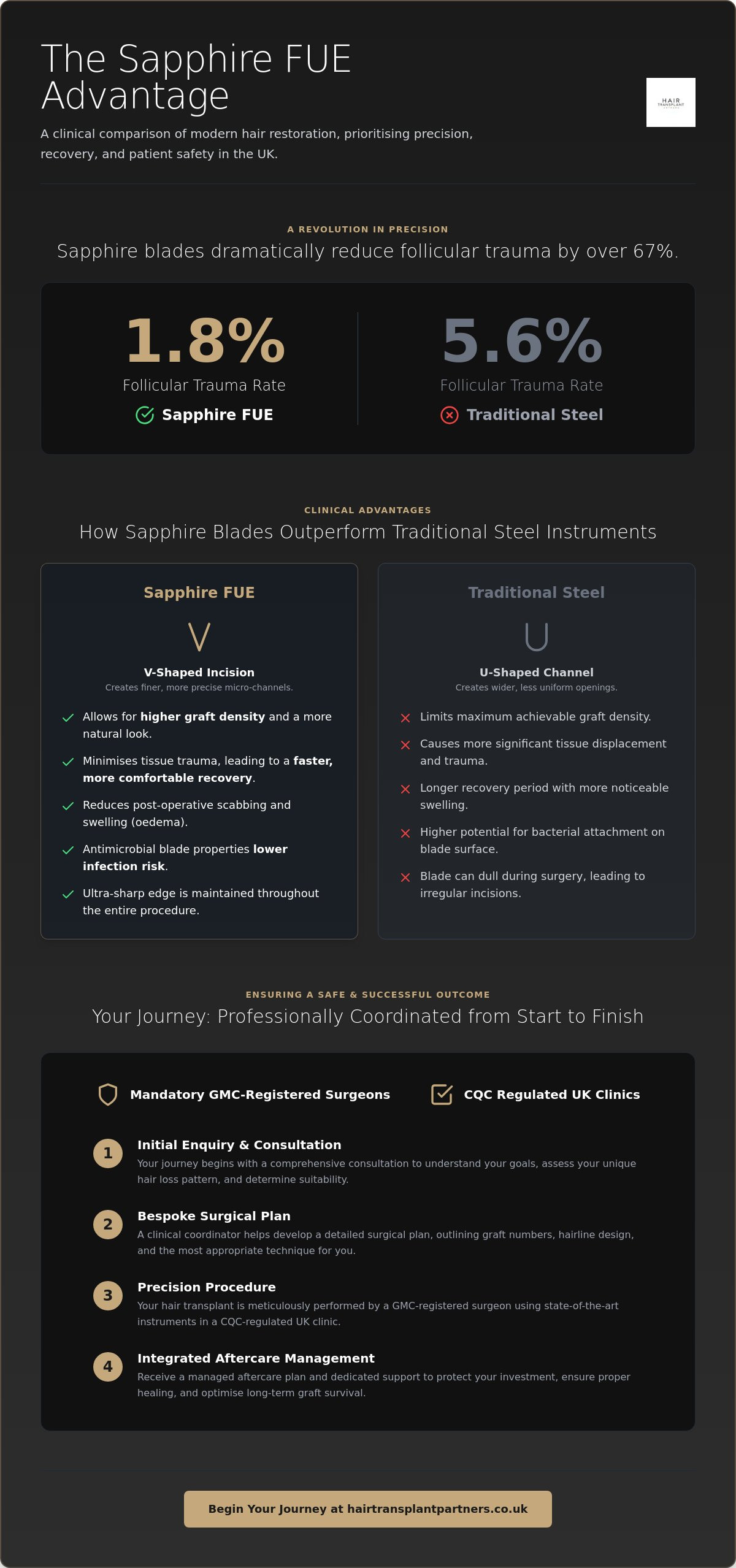
Did you know that using sapphire blades can reduce follicular trauma to just 1.8 per cent, compared to 5.6 per cent with traditional steel instruments? This technical precision is a primary reason why a sapphire fue hair transplant is now a leading choice for patients seeking high-density results and a significantly faster recovery period. It's common to feel overwhelmed by conflicting jargon or anxious about whether your final look will appear truly natural.
You deserve a process that prioritises clinical safety and eliminates the guesswork often associated with hair restoration. This guide clarifies the specific advantages of Sapphire technology and demonstrates how professional coordination ensures your surgical outcome is both predictable and aesthetically superior. We'll examine the benefits of V-shaped incisions, the necessity of GMC-registered expertise in the UK, and the systematic management required for a seamless patient journey from your initial enquiry to final aftercare.
Key Takeaways
- Understand how the V-shaped incision of sapphire blades allows for higher graft density and reduced tissue trauma compared to traditional steel instruments.
- Learn why a sapphire fue hair transplant is often the preferred clinical choice for covering larger areas whilst ensuring a faster, more comfortable recovery period.
- Compare advanced restoration techniques to determine whether the channel-opening method of Sapphire or the direct implantation of DHI best suits your specific hair loss pattern.
- Identify the essential regulatory standards for UK clinics, including the mandatory requirement for GMC-registered surgeons and CQC oversight to ensure patient safety.
- Discover how integrated clinical coordination and bespoke aftercare management plans protect your investment and optimise long-term graft survival.
Understanding Sapphire FUE: The Modern Standard in Hair Restoration
Sapphire FUE represents a significant technical evolution in restorative medicine. Whilst the foundational principles remain rooted in Understanding Sapphire FUE, the specific refinement lies in the instrumentation used to create recipient sites. Traditional methods rely on surgical steel blades to open channels for graft placement. In contrast, a sapphire fue hair transplant utilises blades crafted from synthetic sapphire, a gemstone known for its exceptional hardness and durability. This shift from metal to mineral isn't merely aesthetic; it provides a level of microscopic precision that traditional steel simply cannot match. Every procedure is integrated into a bespoke surgical plan, overseen by a clinical coordinator to ensure that technical excellence translates into a successful patient outcome.
The Evolution from Traditional FUE to Sapphire Technology
The transition from traditional steel to sapphire technology marks a shift towards minimally invasive standards in leading UK clinics. Steel blades, whilst effective, are prone to losing their edge during a surgery. This can lead to irregular channel shapes and increased tissue displacement. Sapphire blades maintain a consistent, ultra-sharp edge throughout the entire procedure. This allows GMC-registered surgeons to create finer, more accurate incisions. These smaller openings facilitate a higher graft density per square centimetre, which is essential for achieving a natural look. By adopting these advanced tools, practitioners can meet the rising clinical demand for procedures that offer both high-volume coverage and refined aesthetic detail.
Why "Sapphire" Matters for Your Scalp Health
The physical properties of sapphire offer distinct biological advantages for the scalp. Sapphire is a non-porous material, which naturally reduces the risk of bacterial attachment and post-operative infection. Because the blades are significantly smoother and sharper than steel, they create V-shaped incisions rather than the U-shaped channels produced by traditional metal. These V-shaped openings minimise the surface area of the wound. This leads to a reduction in post-surgical scabbing and oedema. Patients typically experience a more comfortable recovery period, as the clean nature of the incision promotes faster tissue healing. Choosing a sapphire fue hair transplant means prioritising the health of your donor and recipient areas through superior material science.
To ensure these clinical benefits are fully realised, professional oversight is required. A systematic approach to the surgery involves more than just the tool itself; it requires meticulous tracking and coordination. From the initial graft count to the final placement, every stage is managed to maintain the integrity of the follicles. This structured methodology provides a reliable roadmap for patients, ensuring that the logistical management of the procedure is as precise as the surgical instruments themselves.
Clinical Advantages: Sapphire Blades vs Traditional Steel
The core clinical distinction between these two methods lies in the geometry of the incision. Traditional steel blades create a U-shaped channel. These channels are wider and can cause more significant tissue displacement during the opening phase. Conversely, a sapphire fue hair transplant utilises a V-shaped incision. This tapered shape is significantly more efficient. It allows the surgeon to position follicles in closer proximity to one another, achieving a level of density that steel instruments cannot replicate. Because the incisions are smaller and more refined, there is a measurable reduction in post-operative oedema. Patients often notice that facial swelling is less pronounced, which shortens the initial recovery window.
Sapphire gemstones also possess natural antimicrobial properties. In a clinical environment, this material choice for a sapphire fue hair transplant minimises the risk of infection at the recipient site. The smooth surface of the blade reduces friction against the scalp, leading to cleaner wounds that scab less aggressively. To ensure these technical advantages are utilised correctly, patients should verify that their clinic adheres to Safety Standards: GMC Surgeons and CQC Regulation. This oversight confirms that the precision of the tool is matched by the skill of the operator.
Micro-Channel Precision and Natural Hairline Design
Achieving a natural hairline requires absolute control over the angle and direction of hair growth. Sapphire blades facilitate this level of micro-channel precision. Surgeons can manipulate the blade with greater accuracy, ensuring that each graft follows the natural exit angle of the surrounding hair. This is particularly critical for the frontal hairline, where softness and irregularity are necessary to avoid a "pluggy" appearance. For extensive procedures involving up to 4,000 grafts, this precision ensures that high-volume restoration doesn't compromise the aesthetic integrity of the result. You can use our Graft Calculator to estimate the number of follicles required for your specific needs.
Reduced Tissue Trauma and Faster Healing Timelines
The biological response to a sapphire incision is notably different from that of a steel cut. Because sapphire blades are exceptionally sharp and smooth, they cause less trauma to the surrounding dermal tissue. This reduced trauma often leads to a lower incidence of "shock loss," a temporary condition where existing hair sheds due to the trauma of the surgery. By maintaining the health of the surrounding scalp, the sapphire technique supports a more stable environment for the newly implanted grafts. Sapphire blades minimise trauma to the surrounding blood supply, which is vital for the long-term oxygenation and survival of the transplanted follicles. This systematic reduction in physical stress leads to a more predictable and efficient healing timeline for the patient.
Sapphire FUE vs DHI: Which Technique is Right for You?
Whilst Sapphire FUE is a refined version of the standard extraction method, Direct Hair Implantation (DHI) offers a different mechanical approach to graft placement. The primary technical distinction lies in the sequence of the procedure. A sapphire fue hair transplant requires the surgeon to first create recipient channels using the gemstone blade before manually inserting the follicles. DHI utilises a specialised Choi implanter pen that combines these two actions into a single step. This simultaneous implantation can provide extreme precision for small, targeted areas, but it's not always the most efficient solution for every patient.
Clinical data indicates that a sapphire fue hair transplant is often the superior choice for patients requiring extensive coverage across the scalp. The ability to prepare all recipient channels in advance allows for a more systematic and rapid implantation phase when dealing with high graft volumes. This methodical approach is essential for managing the logistical complexities of a full-day surgery whilst maintaining the viability of the extracted follicles. Determining which method fits your hair loss profile requires a professional consultation to assess scalp elasticity and donor hair quality.
Graft Density and Coverage Considerations
The maximum graft count achievable in a single session typically differs between these two techniques. Sapphire FUE is often employed for procedures requiring 3,500 to 5,000 grafts, as the workflow is optimised for large-scale restoration. It's particularly effective at creating a dense base for the hairline and crown. Patients can use our graft calculator to estimate their specific requirements before a clinical consultation. Whilst DHI is excellent for filling in thinning areas without shaving, it's often restricted to lower graft counts due to the time required to load the implanter pens.
Recovery Timelines and Post-Operative Appearance
The immediate post-operative appearance also varies slightly. Following a sapphire fue hair transplant, tiny crusts form around the V-shaped incisions, which typically shed within seven to ten days. DHI may result in less visible scabbing initially, but the overall physiological recovery timeline remains similar. Most patients can return to non-strenuous office work within three to five days. To accelerate this process, many clinical packages now include Platelet-Rich Plasma (PRP) treatment. This therapy uses your own growth factors to stimulate the healing of the scalp and encourage the early establishment of the new grafts.
Safety Standards: GMC Surgeons and CQC Regulation
Technical advancements like the sapphire fue hair transplant offer superior aesthetic results, but surgical safety is entirely dependent on the regulatory framework of the clinic. In the UK, all providers offering hair restoration surgery must be registered with the Care Quality Commission (CQC). This regulatory body ensures that healthcare services meet fundamental standards of safety, hygiene, and clinical quality. Choosing a clinic without CQC oversight introduces significant risk, as there is no independent verification of their sterilisation protocols or surgical facilities. This is particularly vital given that the UK government proposes to categorise hair restoration as a "red" high-risk procedure under new licensing frameworks.
The General Medical Council (GMC) provides the next essential layer of protection. It is a legal requirement in the UK for a GMC-registered doctor to perform the surgical steps of the procedure, which includes making the incisions for the FUE technique. Many low-cost overseas clinics utilise technicians for these critical stages, which can lead to poor graft placement or permanent scalp damage. Whilst the initial cost in Turkey may range from approximately £1,650 to £2,100, UK-based procedures typically cost between £3,000 and £10,000. This price difference reflects the stringent safety standards, comprehensive medical insurance, and the high level of surgical accountability found in the British medical system.
Identifying Specialist Hair Transplant Surgeons
Verifying a surgeon’s credentials is a vital step in your preparation. You can check the GMC register online to confirm their licence to practise and any specialist qualifications. A surgeon-led procedure is always superior to technician-led alternatives because a doctor possesses the medical training to manage unexpected physiological responses during surgery. This continuity of care ensures that the surgical plan is executed with clinical precision from start to finish. You can use our Appointment Manager to connect with clinics that prioritise these professional standards and provide transparent surgeon information.
The Risks of Uncoordinated Surgical Care
Clinics operating without proper oversight, often amongst high-volume "hair mills," pose a severe threat to patient health. These establishments often prioritise speed over safety, frequently leading to over-harvested donor areas or systemic infections. Professional coordination is the safeguard against these outcomes. It ensures that every stage of the journey is documented and that any post-operative complications are identified and managed immediately. CQC-regulated environments are essential for patient safety because they provide a transparent and accountable setting for complex surgical procedures. This systematic approach reduces the likelihood of needing corrective surgery, which currently accounts for up to 25 per cent of procedures performed by specialist surgeons in the UK.
Managing Your Journey: The Role of Professional Coordination
Successful hair restoration requires more than just advanced technology; it demands a systematic approach to patient management. Whilst the sapphire fue hair transplant provides the clinical foundation for a natural result, the logistical complexity of the procedure involves multiple stages of data tracking and communication. An Appointment Manager serves as the central point of contact, streamlining the journey from the initial enquiry through to the final growth assessment. This professional oversight is particularly beneficial for patients travelling across the UK, as it ensures that every administrative and clinical detail is synchronised before arrival. Hair Transplant Partners UK acts as the logistical backbone of your experience, providing a structured framework that allows the surgical team to focus entirely on the precision of the gemstone blades.
Pre-Operative Planning and Consultation
The process begins with a comprehensive professional consultation, which includes a detailed scalp analysis to determine donor hair density and skin elasticity. This initial data collection is vital for creating an accurate surgical roadmap. Medical coordination ensures that all mandatory pre-operative tests and requirements are met, reducing the risk of same-day cancellations or clinical delays. This methodical preparation ensures that your scalp is in the optimal condition to receive the grafts. For a deeper understanding of how these stages are organised, you can read about the role of a hair transplant appointment manager in our dedicated guide.
Comprehensive Post-Operative Aftercare Management
Graft survival depends heavily on the first twelve months of recovery. A bespoke aftercare management plan is implemented immediately following the surgery to monitor the health of the newly implanted follicles. This schedule includes regular follow-up appointments to track growth patterns and ensure the scalp remains free from irritation or infection. Platelet-Rich Plasma (PRP) therapy is often integrated into this phase to stimulate local blood flow and support the early development of the hair shafts. Your coordination doesn't end when you leave the clinic; it continues for a full year to provide a stable environment for your results to mature. This long-term commitment to oversight ensures that the investment you've made in a sapphire fue hair transplant yields the highest possible density and aesthetic quality.
Securing Your Results with Clinical Oversight
Choosing a sapphire fue hair transplant is a strategic decision that prioritises surgical precision and faster physiological recovery. By utilising gemstone technology to create refined V-shaped channels, you ensure higher graft density whilst minimising trauma to the scalp's blood supply. As we've established, the success of this procedure is inextricably linked to the expertise of your surgical team and the rigour of the regulatory standards they follow. Clinical safety is never optional; it's the foundation of a natural, lasting result.
Professional coordination bridges the gap between advanced technology and a seamless patient experience. Hair Transplant Partners UK offers a structured path to restoration, featuring GMC-registered surgeons and CQC-regulated clinics capable of managing up to 4,000 grafts per session. Our award-winning patient coordination ensures that your progress is tracked meticulously from your first consultation to your final aftercare milestone. Book your complimentary clinical consultation with Hair Transplant Partners UK today. You're one step closer to achieving the density and confidence you deserve.
Frequently Asked Questions
Is Sapphire FUE better than traditional FUE?
Sapphire FUE is considered clinically superior for many patients because the gemstone blades create V-shaped incisions rather than the wider U-shaped channels produced by steel. These finer openings allow for closer graft placement and higher hair density. Because the material is smoother and sharper, tissue trauma is minimised, which leads to less swelling and a more efficient healing process for the scalp.
How much does a Sapphire FUE hair transplant cost in the UK?
A sapphire fue hair transplant in the UK typically ranges between £3,000 and £10,000 depending on the complexity of the case and the number of grafts required. For high-volume or premium procedures, costs can occasionally reach £15,000. These costs reflect the stringent safety standards required by the CQC and the necessity of using GMC-registered surgeons for all surgical incisions.
Can I get 4,000 grafts in a single Sapphire FUE session?
It's possible to transplant up to 4,000 grafts in a single session when using the sapphire technique. The efficiency of the channel-opening phase allows the surgical team to manage high volumes without compromising the viability of the follicles. However, the exact number depends on your donor hair density and the total surface area requiring coverage as determined during your consultation.
What is the recovery time for a Sapphire FUE procedure?
Most patients return to non-strenuous work within three to five days after the procedure. The tiny crusts that form around the recipient sites usually shed within seven to ten days. Full physiological healing of the scalp tissue occurs relatively quickly, although you'll need to follow a structured aftercare plan for several months to protect the developing grafts and monitor scalp health.
Are the results of a Sapphire FUE transplant permanent?
The results are permanent because the procedure uses follicles harvested from the safe zone at the back and sides of the head. These hairs are genetically resistant to Dihydrotestosterone (DHT), the hormone responsible for male pattern baldness. Once these follicles successfully take root in the recipient area, they'll continue to grow for a lifetime, behaving like your natural hair.
How do I know if I am a good candidate for the sapphire technique?
You're likely a good candidate if you have sufficient donor hair density and a healthy scalp. A professional consultation is required to assess your specific hair loss pattern and skin elasticity. This analysis determines if the precision of a sapphire fue hair transplant is the most effective way to meet your aesthetic goals for density and coverage whilst maintaining donor health.
What happens if I need more than 4,000 grafts?
If your hair loss requires more than 4,000 grafts, your clinical coordinator might recommend splitting the restoration into two separate sessions. This approach protects the integrity of the donor area and prevents over-harvesting. A systematic plan ensures that each session builds upon the previous one to achieve full, natural coverage without putting excessive stress on the scalp's blood supply.
Is the sapphire blade made of real gemstones?
The blades are crafted from synthetic sapphire, which is a lab-grown gemstone with the same physical properties as natural sapphire. This material is chosen for its extreme hardness and smooth surface, which allows it to stay sharper for longer than surgical steel. This durability is what enables the surgeon to create thousands of consistent, microscopic incisions with minimal friction and tissue displacement.