

What if the most critical factor in your hair restoration isn't the surgeon's scalpel, but the schedule that dictates every move before and after the procedure? It's a common misconception that surgical skill is the only variable that matters. Most patients feel a justified level of anxiety when trying to coordinate GMC-registered surgeons with CQC-regulated clinics whilst managing their own recovery timelines. Without a dedicated hair transplant appointment manager, the risk of missing a vital pre-operative step or a critical aftercare milestone increases significantly.
We understand that you want a restoration journey that feels structured and secure rather than chaotic. This guide demonstrates how professional clinical coordination ensures a seamless, safe, and successful experience within the UK's strict medical framework. You'll learn how systematic oversight eliminates communication gaps between clinical parties and provides a clear, stress-free roadmap from your initial inquiry to your final results. We will examine the logistical precision required to maintain compliance with medical standards and ensure your surgical timeline remains on track.
Key Takeaways
- Understand why a dedicated hair transplant appointment manager is essential for overseeing your entire patient lifecycle rather than just booking a single date.
- Learn how to navigate the logistical complexities of hair restoration, including the vital timing of pre-operative steps and post-operative aftercare.
- Discover the clinical safety advantages of professional coordination, ensuring all facilities are CQC-registered and surgeons are GMC-registered.
- Identify the specific steps of a streamlined journey, from the initial graft estimation to the final clinical review and procedure selection.
- Gain insight into how a bespoke management approach provides a central point of contact, reducing anxiety and ensuring clear communication throughout.
What is a Hair Transplant Appointment Manager?
A hair transplant appointment manager is a specialised clinical coordinator responsible for synchronising the complex administrative and medical requirements of a restoration programme. Unlike a standard booking application that merely records a date and time, this role involves a comprehensive understanding of the patient's surgical journey. Because hair transplantation is a surgical technique involving the relocation of individual follicles, the logistical requirements are far more demanding than a typical outpatient visit. A manager provides a central point of contact, ensuring that every phase of the process aligns with both clinical safety standards and the patient's personal schedule.
Many digital platforms treat surgical scheduling as a retail transaction. However, a professional hair transplant appointment manager provides oversight that software alone cannot offer. They verify that the chosen clinic maintains its CQC registration and that every surgeon involved is GMC-registered. This level of professional coordination is particularly vital for advanced procedures like Sapphire FUE or DHI. These techniques require precise timing and graft handling, meaning the manager must act as the primary liaison between the patient and the surgical team to prevent any administrative delays that could impact the clinical outcome.
The Clinical Liaison Function
The manager serves as the essential link between the patient and the medical professionals performing the surgery. This function includes several critical responsibilities:
- Information Accuracy: Ensuring that the patient's medical history and specific graft calculations are accurately conveyed to the clinic.
- Consultation Management: Organising the initial complimentary consultation to establish a baseline for treatment and set realistic expectations.
- Surgical Communication: Facilitating direct lines of communication between the surgical team and the patient to answer technical enquiries before the procedure date.
By acting as an intermediary, the manager ensures that the surgeon receives all necessary data points well before the patient arrives at the clinic. This preparation allows the medical team to focus entirely on the surgical execution rather than administrative paperwork on the day of the procedure.
Logistical Oversight for UK Patients
Managing a hair restoration journey in the UK requires a methodical approach to timing and compliance. A hair transplant appointment manager handles the administrative burden so the patient can focus on their recovery. This oversight begins with the first enquiry and continues through to the final 12-month review. The manager coordinates the delivery of pre-operative instructions and ensures that post-operative packs are ready for the patient's immediate use. By maintaining a structured timeline, they ensure that critical milestones, such as post-operative check-ups and aftercare assessments, are never missed. This systematic processing creates a predictable and stable environment for the patient, which is a hallmark of a professionally managed clinical journey.
The Logistical Complexity of a Hair Restoration Journey
A successful hair restoration is rarely the result of a single day in the clinic. It is a sophisticated medical programme that demands precise logistical coordination over several months. Many patients underestimate the complexity of synchronising pre-operative preparation with post-operative recovery. A dedicated hair transplant appointment manager ensures that every stage occurs in the correct sequence, preventing the administrative oversights that can compromise clinical results. This structured approach is essential because the journey involves multiple clinical touchpoints that extend far beyond the surgery itself.
Timing is particularly critical when integrating supplementary treatments like Platelet-Rich Plasma (PRP) with surgical sessions. These interventions must be scheduled to maximise scalp health and follicle receptivity. If these windows are missed, the environment for the newly implanted grafts may not be optimal. Poor coordination often leads to rushed pre-operative steps or delayed post-operative reviews; both of which increase the risk of suboptimal graft survival and visible scarring. This is where professional journey management becomes invaluable, as it aligns these clinical requirements with the patient's availability.
Pre-Operative Milestone Management
The preparation phase involves more than just selecting a date. It requires a logical sequence of scalp assessments and blood tests, typically performed several weeks in advance, to ensure the patient is fit for surgery. Before the procedure, the results from a Graft Calculator must be validated by the surgeon to confirm the donor area can support the requested density without over-harvesting. For patient safety, UK clinics often adhere to a 4,000-graft limit per session to protect donor health and ensure adequate blood supply to the recipient area. Managing these variables requires a systematic approach to avoid delays on the morning of the surgery. You can view our management services to see how we handle these clinical prerequisites.
The Post-Surgical Calendar
The first 72 hours after the procedure are the most critical for graft survival. During this window, the immediate follow-up schedule must be strictly maintained to monitor for any signs of complications. As the initial healing phase concludes, the focus shifts toward long-term Aftercare Management. A structured calendar ensures that progress is tracked at the 3, 6, and 12-month marks. Without this methodical tracking, it is difficult to assess the success of the transplant or intervene if the growth rate is not meeting the expected benchmarks. Proper coordination by a hair transplant appointment manager ensures that the transition from acute surgical care to long-term monitoring is seamless and documented.
Clinical Safety: Why Professional Coordination Matters
Clinical safety in the United Kingdom is governed by strict regulatory bodies, but the burden of verification often falls on the patient. A hair transplant appointment manager acts as a safeguarding layer by rigorously vetting every clinical partner involved in the restoration programme. This systematic oversight ensures that the facility is registered with the Care Quality Commission (CQC) and that the surgical environment adheres to necessary medical standards. By centralising this administrative verification, the manager reduces the logistical risk of a patient inadvertently choosing an unregulated or non-compliant provider.
The manager's duty of care extends to the professional standing of the medical staff. Every surgeon performing a FUE Hair Transplant or DHI Hair Transplant must be registered with the General Medical Council (GMC). A coordinator ensures these credentials are valid and that the surgeon possesses the specific expertise required for complex follicular relocation. This structured coordination significantly lowers the probability of surgical complications. It guarantees that only qualified professionals operate within a controlled, sterile environment, which is essential for both patient safety and successful graft survival.
Vetting Surgeons and Facilities
We maintain a network of specialist hair transplant surgeons who demonstrate proven track records and clinical excellence. This vetting process involves more than a simple certificate check; it includes a review of previous case studies and patient outcomes. By providing transparency regarding surgeon qualifications, the manager allows the patient to make an informed decision based on verified data. This ensures the surgical environment meets the highest UK clinical standards, providing a stable foundation for the procedure. Each facility is audited to ensure it provides the necessary equipment and staff to handle complex procedures safely.
Risk Mitigation and Compliance
Safety protocols are integrated into the journey from the very beginning. The manager standardises the consent process and pre-operative protocols to ensure no medical detail is overlooked. This is a critical step because clear documentation prevents misunderstandings regarding surgical goals or medical histories. For instance, if a patient is undergoing supplementary treatments, the manager ensures that all PRP treatments are administered under direct clinical supervision. An appointment manager ensures CQC compliance through rigorous administrative audits that verify every clinical record and facility certificate meets current regulatory requirements. This level of administrative precision is what differentiates a managed clinical journey from a simple booking service.
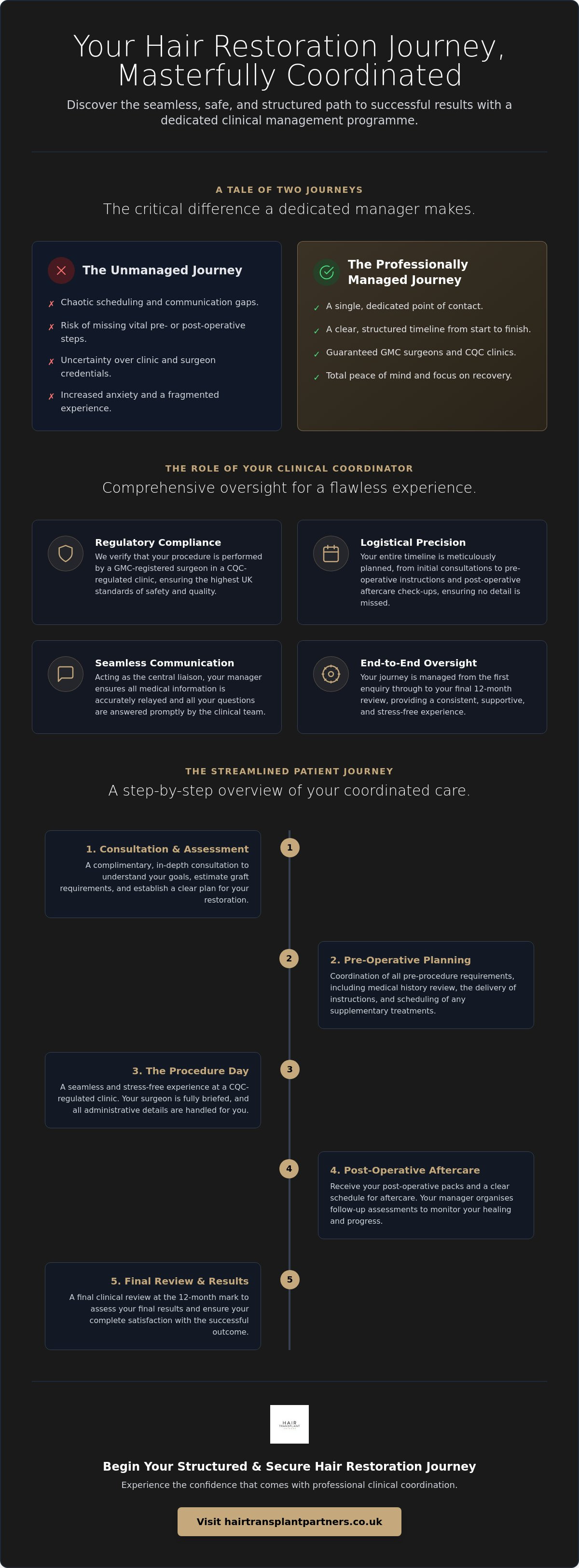
Streamlining the Patient Experience: A Step-by-Step Guide
A well-structured patient journey is the foundation of a successful hair restoration. By breaking the process into distinct, manageable phases, a hair transplant appointment manager ensures that no clinical or administrative detail is overlooked. This systematic progression moves from initial data gathering to long-term monitoring, providing a clear roadmap for the patient. Unlike fragmented services that focus solely on the day of surgery, this managed approach prioritises the 12-month logistical tail that is essential for optimal growth.
- Step 1: The initial complimentary consultation and graft estimation to establish clinical needs.
- Step 2: A comprehensive clinical review followed by surgical date selection at a suitable facility.
- Step 3: Detailed pre-operative preparation and a logistical briefing to ensure the patient is fully informed.
- Step 4: On-site coordination during the procedure day, whether utilising FUE or DHI techniques.
- Step 5: Activation of the 12-month aftercare management plan to track progress and graft survival.
The Consultation and Planning Phase
This phase is where the technical parameters of the restoration are defined. We utilise a Graft Calculator to provide an objective estimate of the follicles required, which helps in setting realistic expectations for hair density. During this stage, the manager assists in determining whether Sapphire FUE or DHI is the most suitable technique based on the patient's hair type and restoration goals. The final surgical plan is always reviewed and authorised by a GMC-registered lead surgeon to ensure medical viability. This level of planning prevents the common error of over-promising results that cannot be clinically achieved.
Execution and Aftercare Follow-Through
On the day of the procedure, coordination is focused on patient comfort and safety within a CQC-regulated facility. The manager ensures that the surgical team has all required documentation and that the patient is briefed on the immediate post-operative steps. Following the surgery, the focus shifts to the Aftercare Management schedule. This includes the first clinical wash and a series of regular check-ins to monitor hair growth patterns and graft survival. These milestones are tracked at the 3, 6, and 12-month marks to ensure the journey remains on a successful trajectory. If you're ready to begin your restoration with a structured plan, you can access our hair transplant appointment manager services today.
The Hair Transplant Partners UK Approach to Journey Management
Hair Transplant Partners UK operates on the principle that clinical excellence is inseparable from administrative precision. Whilst many providers focus exclusively on the surgical event, we prioritise the entire restorative lifecycle. Our approach utilises a dedicated hair transplant appointment manager to bridge the gap between the patient and the surgical suite. This ensures that every logistical detail, from the initial graft estimation to the final clinical review, is handled with methodical accuracy. This award-winning service has become the preferred choice for UK patients seeking a structured and reliable restoration journey.
The choice of surgical technique is central to achieving natural results. We specialise in Sapphire FUE and DHI Hair Transplant techniques because these methods offer superior density and precision. However, these advanced procedures demand a high level of coordination to ensure that follicle transit times are minimised and graft survival is maximised. Our management framework provides the stability required for these complex medical interventions, ensuring that the clinical team can focus entirely on the aesthetic and surgical outcome without administrative distraction.
Personalised Coordination Services
Every patient entering our programme is assigned a dedicated manager to organise their specific clinical path. This isn't a general administrative role; it is a bespoke coordination service designed to remove the stress of scheduling and compliance. This personalised oversight ensures that your journey remains on track and adheres to the highest medical standards.
- PRP Integration: We ensure that Platelet-Rich Plasma therapy is seamlessly integrated into your surgical package at the optimal intervals for healing.
- Density Management: Our managers facilitate sessions of up to 4,000 grafts, ensuring that the workload is managed safely within UK clinical guidelines.
- Central Communication: Your manager acts as a single point of contact for all enquiries, ensuring clear communication between you and the GMC-registered surgical team.
Your Next Steps to Hair Restoration
Beginning your restoration journey is a straightforward, managed process. The first step involves accessing our complimentary consultation service, where we establish a baseline for your treatment. During this session, we utilise our Graft Calculator to provide a realistic projection of your follicles' needs. Our commitment to end-to-end aftercare management ensures that your satisfaction remains a priority long after the procedure is complete. We handle the tracking, the scheduling, and the clinical liaison so you can focus on your results.
Book your complimentary consultation with our appointment management team today to secure your place within our clinical programme and begin your professionally managed journey.
Securing Your Clinical Path to Restoration
Successful hair restoration requires more than just a single day in a clinic; it demands a structured, 12-month commitment to logistical and clinical precision. By utilising a professional hair transplant appointment manager, you ensure that every pre-operative requirement and post-operative milestone is handled with methodical accuracy. This approach eliminates the administrative burden, allowing you to focus on your recovery whilst we manage the complexities of CQC-regulated clinical environments and coordinate with GMC-registered specialist surgeons.
Our award-winning patient coordination service provides the stability and oversight necessary for advanced Sapphire FUE and DHI procedures. You don't have to navigate the regulatory landscape or the intricacies of aftercare scheduling alone. With a dedicated point of contact, your journey remains transparent, safe, and aligned with the highest UK medical standards. This systematic oversight is what differentiates a successful, long-term result from a fragmented experience.
Begin your journey with a complimentary consultation and discover how our systematic approach ensures your long-term satisfaction. We look forward to helping you achieve your restoration goals with clarity and confidence.
Frequently Asked Questions
What does a hair transplant appointment manager actually do?
A hair transplant appointment manager synchronises every phase of the patient lifecycle, from the initial enquiry to the final 12-month review. They handle the logistical coordination between the patient and the surgical team, ensuring all medical history and graft data are accurately conveyed. This role includes verifying that clinics maintain CQC registration and that surgeons possess valid GMC credentials to ensure clinical safety.
Is the appointment management service included in the hair transplant cost?
The appointment management service is an integrated component of our comprehensive restoration packages. We don't charge separate fees for this oversight because we believe professional coordination is essential for a safe and successful outcome. By including this service in the core offering, we ensure every patient benefits from a structured and clinically managed journey without additional administrative costs.
Can I choose my own GMC-registered surgeon through the manager?
You can select a surgeon from our vetted network of specialist hair transplant professionals who meet our rigorous clinical standards. The manager provides detailed information regarding the qualifications and experience of each GMC-registered surgeon. This transparency allows you to choose a lead clinician whose expertise aligns with your specific hair restoration requirements and aesthetic goals.
How does the manager coordinate the aftercare programme?
Coordination of the aftercare programme involves scheduling and tracking all critical post-operative milestones. Your manager organises the immediate follow-up visits, including the first clinical wash, and tracks your progress at the 3, 6, and 12-month marks. This methodical approach ensures that your recovery follows the prescribed aftercare management plan for optimal graft survival and long-term results.
Do I need a manager if I am only having a small procedure?
Professional coordination is necessary for all procedures to ensure adherence to UK medical and safety regulations. Even for smaller sessions, a hair transplant appointment manager provides the essential vetting of CQC-registered facilities. This oversight guarantees that the surgical environment and the medical team meet the required standards for any level of follicular relocation or scalp treatment.
What happens if I need to reschedule my surgery through the manager?
If you need to reschedule, your manager facilitates the entire process with the clinic and the surgical team to find a suitable alternative. They re-coordinate all administrative tasks and ensure that pre-operative requirements, such as blood tests, remain within the valid timeframe for the new date. This centralised communication prevents logistical errors and ensures your surgical timeline remains organised and stress-free.
How is my medical data handled by the coordination team?
Your medical data is handled with strict adherence to UK data protection standards and clinical confidentiality protocols. The manager acts as the secure liaison, ensuring that your medical history and graft calculations are only shared with the GMC-registered professionals involved in your treatment. This systematic data management protects your privacy whilst ensuring the surgical team is fully informed before the procedure begins.
Does the manager help with the graft calculator results?
The manager assists by facilitating the initial estimation and ensuring that the Graft Calculator results are verified by a lead surgeon. They use this data to help you set realistic expectations for density and coverage before you commit to a surgery date. This ensures that the final surgical plan is clinically viable and respects the long-term health of your donor area.