
The ultimate success of your hair restoration isn't determined solely in the operating theatre; it begins in the fourteen days leading up to your procedure. While it's natural to focus on the surgery itself, clinical data suggests that graft survival rates, which can reach 95% in elite clinics, are heavily influenced by your physiological state on the day. Following a structured hair transplant pre-operative care protocol is the most effective way to mitigate the risk of graft failure and ensure your scalp is primed for maximum density.
We understand that conflicting advice regarding medications and lifestyle adjustments often leads to unnecessary anxiety before your surgery. You deserve a clear, methodical roadmap that replaces confusion with clinical certainty. This guide provides a step-by-step preparation timeline based on GMC-standard protocols, covering everything from blood-thinning supplements to surgical day logistics. By mastering these essential adjustments, you can approach your procedure with the confidence that every detail has been organised for a seamless experience and optimal long-term results.
Key Takeaways
- Understand why the 14-day window before surgery is vital for establishing the biological foundation and scalp vascularity required for follicle integration.
- Access a clinical roadmap for hair transplant pre-operative care, detailing which medications and habits to phase out to protect graft viability.
- Optimise your scalp health and donor area visibility through specific hygiene and hair length protocols requested by surgical teams.
- Follow a structured morning-of-surgery routine, including nutritional guidance, to maintain stable blood sugar and physical comfort throughout the day.
- Learn how professional coordination and tracking tools can remove the administrative burden of managing your pre-operative requirements.
The Clinical Significance of Hair Transplant Pre-Operative Care
Successful Hair transplantation depends on a synergy between surgical expertise and the patient’s biological readiness. While the procedure itself is often the primary focus, hair transplant pre-operative care serves as the essential foundation for follicle integration. This phase isn't merely a set of suggestions; it's a clinical requirement designed to stabilise the scalp environment before the first incision is made. By preparing the body systematically, you ensure the scalp is a receptive host for the new grafts.
The 14 days leading up to your surgery are particularly vital for managing scalp vascularity. During this fortnight, your body must reach a state of physiological equilibrium. High vascularity is beneficial for long-term growth, but uncontrolled blood flow during surgery creates significant technical challenges. When a patient follows a strict pre-operative protocol, they help reduce intra-operative bleeding. This allows the GMC-registered surgeon to work with maximum precision, as a clear surgical field is necessary for placing grafts at the correct depth, angle, and orientation. Precision is the primary factor that separates a natural-looking hairline from an obvious surgical result.
Graft Survival and the Donor Zone
The condition of your donor zone directly impacts the ease of follicle extraction. A healthy, supple scalp allows for smoother harvesting, which reduces the risk of transection or damaging the hair bulb. Once extracted, these follicles require immediate nourishment upon implantation. Proper preparation ensures that blood flow is optimised to support newly implanted Sapphire FUE grafts. For those undergoing DHI techniques, a "quiet" scalp with minimal inflammation is essential. If the scalp is irritated, the specialised Choi implanter pens cannot place the follicles with consistent depth, which may compromise the final density.
Minimising Surgical Risks
Systemic preparation is your primary defence against post-operative complications. Adhering to clinical guidelines helps achieve the following outcomes:
- Reduced Infection Risk: A clean, prepared system responds better to the local anaesthesia and surgical process.
- Accelerated Healing: Proper pre-op care impacts the speed of the post-operative healing phase, helping the scalp recover within the standard 7 to 10-day window.
- Enhanced Safety: Transparency regarding your medical history during the coordination phase allows your team to adjust protocols for your safety.
Sharing details about your current medications or previous surgeries ensures that the surgical plan is tailored to your specific physiological needs. This methodical approach transforms the surgery from an uncertain event into a predictable clinical process.
The 14-Day Countdown: Medical and Lifestyle Adjustments
Effective hair transplant pre-operative care relies on a disciplined, chronological approach. It isn't enough to modify your habits 24 hours before the procedure; clinical success requires a 14-day lead time to stabilise your system. To maintain order, our coordination team uses an Appointment Manager to track these milestones with you, ensuring no critical step is overlooked. Understanding the clinical rationale behind each restriction helps maintain compliance and protects your investment.
Medications and Supplements to Avoid
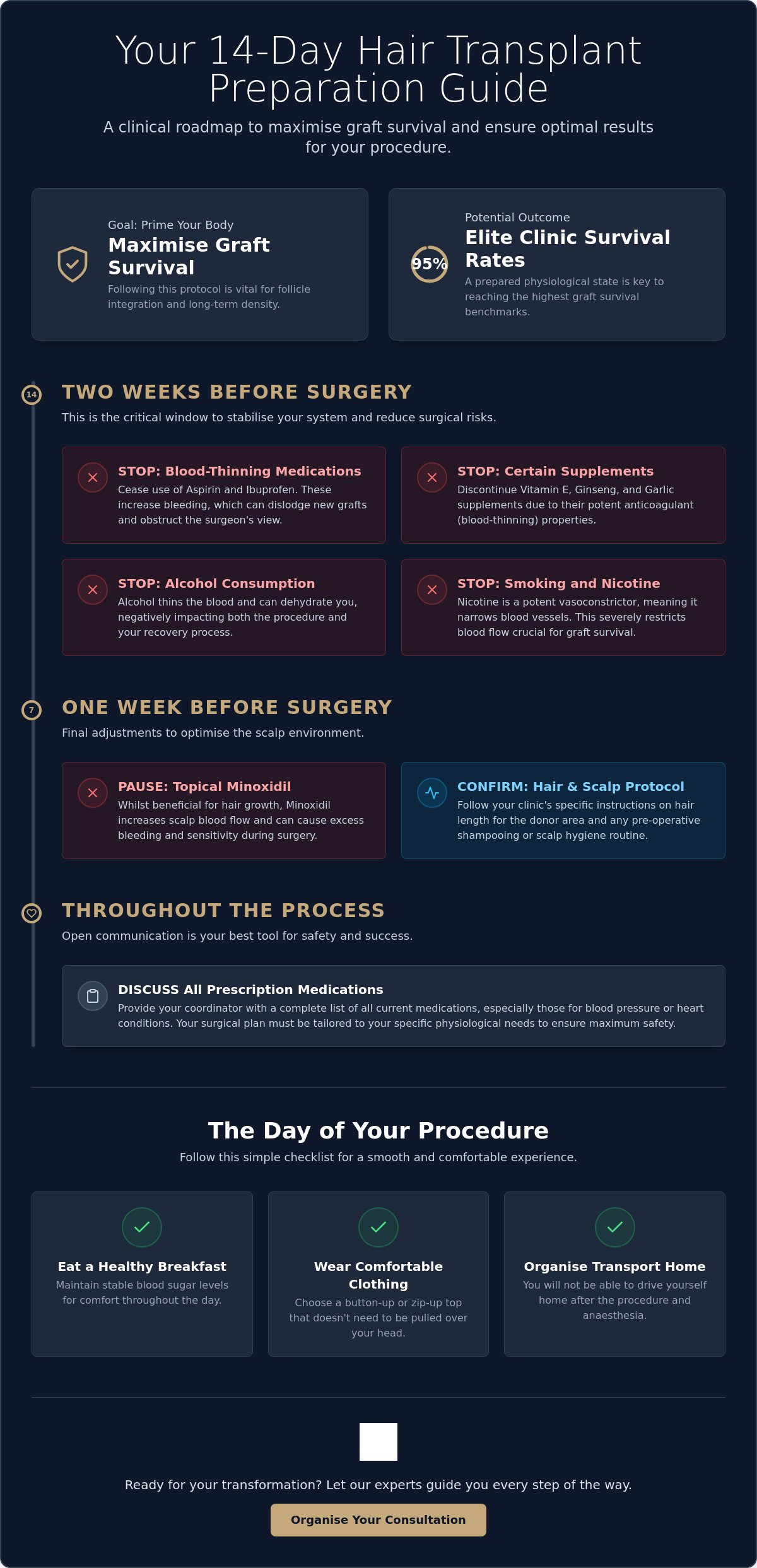
Blood-thinning agents are the primary concern during the two-week countdown. Medications containing aspirin or ibuprofen must be avoided, as they inhibit platelet aggregation and increase the risk of excessive bleeding during hair transplant procedures. This bleeding can physically push new grafts out of their sites, reducing final density and complicating the surgeon's work.
Herbal supplements often seem harmless, yet Vitamin E, Ginseng, and Garlic supplements have potent anticoagulant properties. You should also pause the use of Minoxidil at least seven days prior. Whilst it's a staple for hair maintenance, it increases blood flow to the scalp and can lead to heightened sensitivity or increased bleeding during the excision and implantation phases. If you're taking prescription medication for blood pressure or heart conditions, these must be discussed with your consultant well in advance to ensure a safe surgical plan.
Smoking, Alcohol, and Vascular Health
Vascular health is the lifeblood of a successful transplant. Nicotine is a potent vasoconstrictor that narrows blood vessels and reduces the delivery of oxygen to the scalp. This oxygen is vital for the survival of newly relocated follicles. Patients who continue to smoke or vape risk starving their grafts during the most critical 48 hours of integration. For the best result, total nicotine abstinence is required for at least seven days before your appointment.
Alcohol acts as a systemic blood thinner and should be avoided for at least one week. Beyond the risk of bleeding, alcohol consumption can interfere with the efficacy of local anaesthesia, potentially leading to discomfort during the procedure. Maintaining a clean system ensures that the anaesthetic works predictably and that your recovery begins on a stable footing. If you are unsure about how a specific habit might affect your results, you can use our coordination service to verify your preparation steps with a clinical consultant.
Scalp Health and Physical Preparation
Physical preparation of the recipient and donor sites is as critical as systemic medical adjustments. Within the framework of hair transplant pre-operative care, the scalp is viewed as the biological soil that must be nourished and cleared of obstructions before implantation. Any active dermatological condition, such as seborrhoeic dermatitis or significant dandruff, creates an inflammatory environment that can hinder the surgeon's precision and increase the risk of post-operative infection.
If you identify redness, scaling, or persistent itching in the weeks before your procedure, it's vital to notify your clinical coordinator. Treating these conditions early ensures the scalp is quiet and receptive on the day of surgery. Some clinics recommend Platelet-Rich Plasma (PRP) sessions in the months leading up to the procedure. This clinical intervention aims to improve scalp vascularity and strengthen existing hair follicles, providing a more robust environment for the incoming grafts.
Hair Length and Dyeing Protocols
Patients are often tempted to tidy their hair before an appointment, but you should avoid cutting your hair for at least two weeks prior to a Hair transplant surgery. Maintaining length in the donor area allows the surgical team to accurately assess the natural growth direction and density of your hair. This visibility is essential for both FUE Hair Transplant and DHI Hair Transplant techniques, as it informs the extraction pattern and ensures a balanced harvest.
A strict 10-day rule applies to hair dye. Chemical agents found in dyes can cause latent scalp irritation or microscopic chemical burns that are not always visible to the naked eye. Correct hair transplant pre-operative care at this stage prevents any residual chemicals from interfering with the sterile environment of the operating theatre. To ensure the scalp is in peak condition, all colouring should be completed at least ten days before your session.
Scalp Hygiene and Massage
Maintaining a consistent but gentle cleansing routine is the final pillar of physical preparation. You should use a neutral, fragrance-free shampoo to eliminate bacterial buildup without stripping the scalp of its natural protective oils. Avoid using abrasive exfoliants or harsh chemical treatments, as these can create micro-tears in the skin. Using an Appointment Manager to log your hygiene milestones can help ensure you remain compliant with these clinical requirements.
There is an ongoing clinical debate regarding the benefits of scalp massage. Many practitioners suggest that daily massage for 10 to 15 minutes can improve scalp elasticity, particularly in the donor zone. Increased laxity makes the extraction process more efficient and can reduce the mechanical stress placed on the skin during the procedure. This is a simple, non-invasive way to contribute to the overall success of your pre-operative protocol.
The Day of Surgery: Logistics and Clinical Protocol
The final 24 hours represent the culmination of your hair transplant pre-operative care efforts. This period requires strict adherence to clinical protocols to ensure your body is prepared for the physical demands of a long procedure. Mental preparation is equally significant. A session involving 4,000 grafts can last between six and eight hours, so maintaining a calm, focused mindset is essential for a smooth experience. By following a structured morning routine, you remove the stress of last-minute logistics and allow the clinical team to begin their work without delay.
Morning Routine and Hygiene
On the morning of your surgery, you should perform a final hair wash using a mild, non-perfumed antiseptic shampoo. This reduces the bacterial load on the scalp and provides a sterile environment for the surgical team. You must avoid applying any additional hair products, moisturisers, or fragrances to the face and scalp. These substances can interfere with the adherence of surgical markers or the sterility of the recipient site. Clear skin and a clean scalp are the primary requirements for the initial marking and anaesthesia phase.
Nutritional stability is a priority for patient comfort. You must eat a substantial breakfast to maintain stable blood sugar levels during the session. However, caffeine is strictly prohibited on the day of surgery. Caffeine is a stimulant that can increase your heart rate and blood pressure, which may lead to increased bleeding during the donor excision phase. You should opt for water or fruit juices instead. Following these dietary restrictions ensures the local anaesthesia remains effective and predictable throughout the day.
What to Bring to the Clinic
Your choice of clothing is a practical necessity for protecting your investment. You must wear a button-down or zip-up shirt. This allows you to change at the end of the day without pulling a garment over your head. Any contact with the recipient area in the first 24 hours can easily dislodge newly implanted follicles, so avoiding "over-the-head" clothing is a non-negotiable rule. Consider the following checklist for your arrival:
- Appropriate Attire: Loose-fitting trousers and a front-fastening top to prevent graft friction.
- Documentation: Your signed consent forms and any specific medical records requested during your consultation.
- Transport Plan: A confirmed arrangement for a return journey that doesn't involve you driving.
Logistical coordination is the final step in a successful preparation plan. You must not drive yourself home after the procedure, as the local anaesthesia and the physical fatigue of a long surgical session can affect your reaction times and alertness. If you need to verify any last-minute details regarding your arrival time or specific preparation steps, you can access your schedule through our Appointment Manager.
Professional Coordination: Your Roadmap to Success
Managing the logistical details of hair transplant pre-operative care shouldn't rest entirely on the shoulders of the patient. At Hair Transplant Partners UK, we provide a structured framework that removes the administrative burden of surgical preparation. Our approach integrates clinical oversight with technical precision, ensuring that every patient follows a clear, CQC-regulated path toward their procedure. By centralising your preparation requirements, we eliminate the risk of missed milestones and protect the integrity of your results. This methodical oversight is what allows our surgical teams to perform with maximum efficiency.
Operating within CQC-regulated standards means that our protocols aren't just suggestions; they are part of a rigorous safety and quality framework. This oversight ensures that your preparation meets the highest clinical benchmarks from day one. Across all our centres, the consistency of care remains absolute. Our team monitors your progress through the Appointment Manager, allowing for real-time adjustments if your medical circumstances change. This proactive management style prevents last-minute cancellations and ensures that you are physically and mentally prepared for the day of surgery.
The Appointment Manager Advantage
Our proprietary Appointment Manager serves as the logistical backbone of your journey. It provides personalised reminders for specific medication pauses and lifestyle changes, such as the 14-day nicotine cessation window or the cessation of herbal supplements discussed in previous sections. This system offers a direct line of communication for immediate queries, such as "can I take this medication?" or "is this scalp cleanser appropriate?". This level of coordination is particularly beneficial for patients transitioning from initial consultation to the operating theatre, as it ensures all pre-operative data is synced with the surgical team's requirements. You don't have to guess if you're ready; the system confirms it for you.
Securing Your Results
Precision planning extends to the biological requirements of the surgery. Before you arrive, tools like our Graft Calculator help you understand your specific surgical needs, ensuring that the donor area is managed sustainably. There is a direct correlation between methodical pre-operative coordination and high graft density outcomes. When the patient arrives at the clinic with a quiet scalp and stable vascularity, the surgical team can focus entirely on the technical excision and implantation phases. This managed journey is what leads to consistently high patient satisfaction and award-winning results.
Your transformation begins with a structured, professional plan that prioritises your safety and your final aesthetic result. Book your complimentary consultation today to start your journey with a team that prioritises clinical excellence and logistical precision.
Securing Your Clinical Foundation for Hair Restoration
Adhering to a disciplined 14-day preparation window ensures that your scalp is biologically receptive and your system is physiologically stable. By phasing out anticoagulants and managing lifestyle factors like nicotine intake, you directly influence the precision of the extraction and the ultimate density of your results. This structured approach to hair transplant pre-operative care transforms a complex medical procedure into a predictable, managed journey. Every clinical adjustment you make in the weeks leading up to your surgery contributes to the long-term survival of your grafts.
At Hair Transplant Partners UK, we combine the expertise of GMC-registered specialist surgeons with CQC-regulated clinical standards to deliver exceptional outcomes. Our personalised coordination services ensure every milestone is tracked, removing the administrative burden from the patient. You don't have to navigate these requirements alone; our team provides the logistical backbone needed for a seamless experience from your first enquiry to your final result. Start your hair restoration journey with a complimentary consultation and secure the clinical foundation your transformation deserves. We look forward to providing the methodical care required for your success.
Frequently Asked Questions
Can I drink coffee on the morning of my hair transplant?
No, you must avoid all caffeine on the day of your surgery. Caffeine is a stimulant that can increase your heart rate and elevate blood pressure, which often leads to increased bleeding during the donor excision phase. This can interfere with the surgeon's precision and may reduce the efficacy of the local anaesthesia.
How long before the surgery should I stop smoking?
You should stop smoking or using nicotine products at least seven days before your procedure. Nicotine acts as a vasoconstrictor, narrowing the blood vessels and reducing oxygen delivery to the scalp. Since oxygen is vital for the survival of newly relocated follicles, stopping early is a critical component of successful hair transplant pre-operative care.
Do I need to shave my head before arriving at the clinic?
No, you shouldn't shave your head before your appointment. The surgical team needs to see your natural hair growth patterns and density to plan the extraction and implantation effectively. Any necessary shaving will be performed at the clinic under sterile conditions to meet the specific requirements of the FUE or DHI technique.
What happens if I forget to stop taking my vitamins or supplements?
You must notify your clinical coordinator immediately if you have inadvertently taken supplements like Vitamin E, Ginseng, or Garlic. These substances have anticoagulant properties that increase the risk of intra-operative bleeding. The clinical team will assess the situation and determine if the procedure can safely move forward or if a short delay is necessary.
Can I take my regular prescription medications before the procedure?
This depends entirely on the type of medication you are prescribed. You must provide a full list of your medications during the coordination phase for clinical review. Whilst most chronic medications for conditions like high blood pressure are continued, any blood-thinning prescriptions require specific management and approval from your specialist surgeon.
Why is a button-down shirt recommended for the day of surgery?
A button-down or zip-up shirt is required to protect the newly implanted grafts after the session. Pulling a garment over your head risks catching and dislodging the delicate follicles in the recipient area. Using front-fastening clothing ensures that you can change comfortably without any physical contact with your scalp during the first critical 24 hours.
How many days off work should I organise for the pre-operative and recovery phase?
Most patients organise 7 to 10 days away from work to allow for the initial healing phase. This timeframe covers the period when scabbing and redness are most prominent. If your occupation involves heavy physical labour or a dusty environment, you may need to extend this period to ensure the grafts aren't compromised by strain or infection.
Is it safe to exercise heavily in the week leading up to the transplant?
You should avoid intense physical exertion for at least 48 hours before your surgery. While moderate activity is acceptable earlier in the week, heavy lifting or high-intensity training can affect your blood pressure and systemic inflammation levels. Maintaining a stable, rested physiological state is a key part of your hair transplant pre-operative care roadmap.