

Why does one clinic quote £3,000 whilst another demands £15,000 for the same number of grafts? This price disparity often triggers more anxiety than it does clarity, leaving many to wonder if they are paying for prestige or genuine surgical excellence. You've likely encountered "all-inclusive" deals that seem too good to be true, and you're right to be cautious. It's common to feel overwhelmed by the lack of transparency in the hair transplant cost uk market, especially when your safety and long-term appearance are at stake.
We've designed this 2026 guide to function as a methodical roadmap through the complexities of surgical pricing. You'll gain a clear understanding of the clinical variables that influence total expenditure, from follicle extraction techniques to the necessity of structured aftercare management. We provide a practical framework to evaluate clinic quality and a system to calculate your specific graft requirements. By the end of this article, you'll have the data needed to move from confusion to a confident, evidence-based decision about your restoration journey. Our goal is to ensure your investment is protected by clinical oversight and logical planning.
Key Takeaways
- Understand that the standard hair transplant cost uk in 2026 typically ranges from £3,000 to £10,000, determined by graft volume and surgical complexity.
- Evaluate the clinical differences between Sapphire FUE and DHI techniques to identify which method offers the most efficient path to your desired hair density.
- Identify the long-term financial risks of low-cost overseas procedures, including the logistical burden of repair surgeries and the absence of UK-based aftercare.
- Learn how to verify clinic standards through CQC registration and GMC licensing to ensure your investment prioritises patient safety and medical authority.
- Discover how professional coordination through an Appointment Manager can streamline your clinical journey and provide a more structured approach to hair restoration.
How Much Does a Hair Transplant Cost in the UK for 2026?
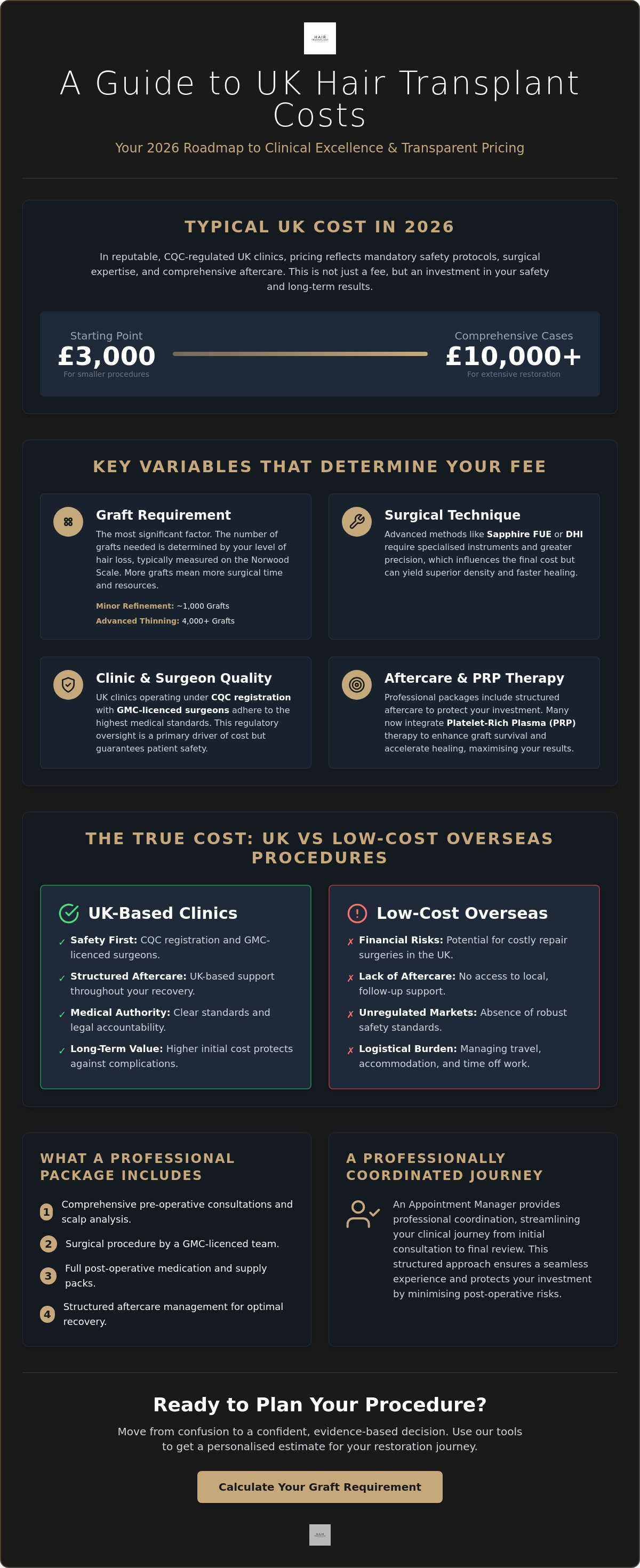
In 2026, the hair transplant cost uk landscape is defined by clinical standards and procedural complexity. Most patients will find that reputable clinics quote between £3,000 and £10,000 for a primary procedure. This pricing is not arbitrary; it reflects the mandatory overheads associated with Care Quality Commission (CQC) regulation and the employment of GMC-registered surgeons. These regulatory frameworks ensure that surgical centres maintain high safety protocols, which is a primary driver of the domestic price point compared to unregulated markets.
Patients must choose between two primary financial models: the "per-graft" structure and the "fixed-package" approach. Per-graft pricing offers precision, as you only pay for the exact quantity of follicles moved. Fixed packages, however, often provide better predictability for larger sessions. When evaluating these options, it's vital to consider the specific hair transplantation techniques utilised, as more advanced methods like Sapphire FUE require specialised instruments that influence the final hair transplant cost uk. While basic procedures may start at £3,000, a comprehensive 4,000-graft Sapphire FUE session typically ranges between £5,000 and £8,000 in a regulated environment.
What is Included in a Professional Surgical Package?
A transparent clinical quote should encompass the entire surgical journey rather than just the time spent in the theatre. A professional package typically includes:
- Pre-operative consultations: Comprehensive scalp analysis and graft mapping to determine donor hair viability.
- Surgical execution: The procedure itself, involving local anaesthesia and the expertise of a GMC-licensed surgeon.
- Post-operative supplies: Medication packs containing antibiotics, anti-inflammatories, and detailed instructions for immediate recovery.
The Role of PRP Treatment in Modern Pricing
Leading UK providers now integrate Platelet-Rich Plasma (PRP) therapy into their standard surgical protocols. This regenerative treatment involves processing the patient's own blood to concentrate growth factors, which are then injected into the recipient area. While this adds a marginal increase to the initial fee, it significantly enhances graft survival rates and accelerates the healing of the scalp. Including PRP represents a logical cost-benefit decision; it maximises the return on your primary investment by ensuring the highest possible density from the transplanted follicles.
Key Variables That Determine Your Hair Restoration Fee
Understanding the primary drivers of the hair transplant cost uk involves more than just a surface-level quote. It requires a systematic analysis of clinical variables that dictate the complexity of the procedure. The total expenditure is not a static figure but a calculation based on the volume of donor material, the precision of the instruments used, and the professional oversight required to ensure a successful outcome. Each variable serves as a building block for the final surgical plan, ensuring that the patient receives a result tailored to their specific physiological needs.
The logistical management of your journey also influences the value proposition. A procedure is not a standalone event; it's a managed clinical process. This includes the administrative precision provided by an Appointment Manager and the rigour of structured Aftercare Management. These elements ensure that the surgical investment is protected through every stage of the recovery timeline. When these coordination services are integrated, the risk of post-operative complications decreases, providing a better long-term return on your initial financial commitment.
Calculating Your Graft Requirement
The most significant variable in any restoration plan is the number of grafts required to achieve the desired density. Surgeons utilise the Norwood Scale to categorise the extent of hair loss, which provides a baseline for the surgical scope. For example, a minor hairline refinement may only require 1,000 grafts, whilst advanced thinning across the crown and frontal region might necessitate 4,000 grafts or more. To move from a generic quote to a personalised estimate, patients should utilise a Graft Calculator. This tool allows for a more accurate projection of the surgeon's time and the clinical resources needed for the session.
Surgeon Expertise and Clinical Regulation
The professional standing of the medical team is a non-negotiable factor in UK pricing. All surgical procedures in the United Kingdom must be performed in facilities that meet strict safety standards. As noted in the NHS hair transplant guide, it's essential to verify that your surgeon is GMC-registered and the clinic is CQC-regulated. These bodies provide a safety net that justifies the domestic price point. Choosing a "technician-only" clinic or a non-regulated facility might reduce the upfront hair transplant cost uk, but it introduces substantial financial risks associated with corrective "repair" surgeries if the initial results are poor or unsafe.
Sapphire FUE vs DHI: Analysing Technique and Price Differences
The clinical choice between Sapphire FUE and Direct Hair Implantation (DHI) is a primary factor in determining the hair transplant cost uk. These methods represent distinct approaches to follicle placement, each with its own logistical and surgical requirements. Whilst both techniques fall under the broader umbrella of Follicular Unit Extraction, the instrumentation and time-on-task vary considerably. Clinics typically reflect these variations through tiered pricing structures that account for the specialised tools and surgeon hours required for each method.
Selecting the appropriate technique is a matter of administrative and medical efficiency. It requires balancing the patient's specific hair loss pattern with the technical capabilities of the surgical team. A methodical approach to this choice ensures that the patient achieves the highest possible density without unnecessary expenditure. Understanding the mechanical differences between these two procedures is essential for any patient looking to move from a general enquiry to a structured surgical plan.
Sapphire FUE: The High-Density Value Choice
Sapphire FUE utilises blades crafted from synthetic gemstone rather than traditional surgical steel. This material allows for significantly finer, V-shaped incisions. This technical advantage reduces tissue trauma and minimises the risk of scabbing, which often leads to a faster recovery timeline. For sessions involving large-scale restoration, such as a 4,000-graft procedure, Sapphire FUE offers a superior cost-to-result ratio. It enables surgeons to achieve high density by placing grafts in closer proximity without compromising the blood supply to the scalp. This technique is frequently recommended for its balance of clinical precision and competitive pricing within the hair transplant cost uk market.
DHI: Precision for Targeted Restoration
DHI (Direct Hair Implantation) represents a premium surgical tier. It employs a specialised instrument known as a Choi pen, which allows the surgeon to extract and implant the follicle in a single motion. This eliminates the separate channel-opening stage required in other methods. The increased technical demand and extended theatre time associated with this process often results in a higher initial fee. DHI is particularly effective for targeted restoration work, such as beard transplants or dense crown reconstruction, where precise control over the angle and depth of each hair is critical. The premium paid for DHI reflects the specialised skill set required to operate the implantation tools with clinical accuracy over several hours.
Avoiding the True Cost of Low-Quality Overseas Procedures
The initial sticker price of overseas clinics often masks the true hair transplant cost uk patients eventually face. Whilst an upfront quote from a clinic in Turkey or Eastern Europe may appear lower, it frequently excludes the logistical and medical safeguards found in a regulated domestic environment. Medical tourism introduces variables such as international travel, accommodation, and the absence of a local clinical point of contact. These factors don't just add to the financial total; they increase the psychological burden on the patient during a vulnerable recovery period.
A significant risk of low-cost overseas procedures is the necessity for corrective or "repair" surgery. Data from the International Society of Hair Restoration Surgery indicates that a vast majority of specialists perform procedures to fix the results of poor-quality transplants. The financial and emotional weight of undergoing a second surgery to correct a "budget" first attempt often exceeds the cost of a high-quality UK procedure. By utilising a dedicated Appointment Manager, you ensure your journey is managed by a professional who prioritises clinical safety and logistical efficiency from the outset.
Clinical Safety and Legal Recourse
Operating within the UK means your procedure is governed by strict medical regulations. If a complication arises, patients in CQC-regulated clinics have clear legal recourse and a framework for resolution. In contrast, overseas clinics operate under different jurisdictions, making it nearly impossible to seek compensation for surgical errors. A CQC-regulated environment acts as a functional insurance policy for your scalp. It guarantees that the theatre environment, surgical equipment, and surgeon qualifications meet national standards, protecting your health and the long-term viability of your hair transplant cost uk investment.
The Importance of Managed Aftercare
The success of a transplant is often determined in the first 14 days post-surgery. This period is critical for graft survival, yet many overseas patients return home within 48 hours, leaving them without immediate clinical support. Professional Aftercare Management provides a structured system for monitoring recovery progress whilst you are at home. A dedicated coordinator tracks your healing milestones and ensures that any signs of infection or graft displacement are addressed immediately. This methodical oversight is a primary reason why UK-managed patients report higher long-term satisfaction levels. They aren't just paying for a surgery; they are paying for a managed clinical outcome.
Planning Your Procedure with Hair Transplant Partners UK
Navigating the hair transplant cost uk landscape requires more than a simple price comparison. It demands a structured approach to clinical selection and administrative oversight. Hair Transplant Partners UK functions as a methodical guide, connecting you with leading CQC-regulated surgical centres that prioritise patient safety. Our model is built on the integration of medical excellence and logistical precision. We ensure that every stage of your procedure, from the initial extraction to the final growth review, is managed with efficiency. This oversight is vital for maintaining the high standards expected of GMC-registered surgeons who perform our facilitated Sapphire FUE and DHI procedures.
A central component of our service is the Appointment Manager. This dedicated professional streamlines your clinical path by handling the complex scheduling and communication requirements of a surgical journey. Instead of managing multiple streams of information yourself, you have a single point of contact who understands the nuances of both Sapphire FUE and DHI techniques. This level of coordination reduces administrative friction and allows you to focus entirely on your recovery. By centralising the management of your case, we provide a stabilising force that bridges the gap between administrative pragmatism and medical authority.
Your Personalised Patient Journey
Every restoration plan begins with a clear understanding of your specific needs. Our Graft Calculator allows you to establish a realistic budget early in the process by estimating the volume of follicles required for your desired density. This tool moves you beyond generic market averages and provides data specific to your scalp. Once the surgical plan is in place, our Aftercare Management programme provides structured support through to your 12-month post-operative review. This systematic tracking ensures that your results are monitored by professionals who can provide immediate guidance if your healing deviates from the expected timeline. This long-term commitment is included in every surgical package we facilitate.
Take the First Step Toward Restoration
Achieving a successful outcome starts with a comprehensive assessment. During your initial assessment and scalp analysis, a specialist will evaluate your donor area viability and discuss the most appropriate surgical technique for your hair loss pattern. This clinical data forms the foundation of your personalised hair transplant cost uk estimate, ensuring there are no hidden fees or unexpected clinical charges. You can Book your free consultation with Hair Transplant Partners UK today to begin your journey with a trusted clinical partner.
Securing Your Clinical Outcome in 2026
Evaluating the hair transplant cost uk is a process of balancing surgical precision with long-term clinical safety. We've established that domestic pricing is a direct reflection of mandatory CQC-regulated clinical environments and the expertise of GMC-registered specialist surgeons. These standards aren't just regulatory requirements; they're the foundation of a successful restoration. By choosing a structured path over unmanaged alternatives, you mitigate the financial risk of corrective procedures and ensure your grafts receive the highest level of care.
Our award-winning patient coordination service brings order to this complex journey. It provides the administrative pragmatism needed to manage your transition from initial enquiry to final growth review. Every detail is handled with the precision you expect from a professional medical partner. You're now equipped with a clear understanding of the variables that define value in the UK market. We're committed to ensuring your restoration is methodical, transparent, and successful.
Start your journey with a complimentary consultation to receive a personalised assessment of your needs. We look forward to providing the logistical and clinical backbone for your hair restoration.
Frequently Asked Questions
Is a hair transplant available on the NHS?
No, hair transplants are not available on the NHS for treating male or female pattern baldness. The NHS categorises hair restoration as a cosmetic procedure. Funding is only considered in exceptional clinical circumstances, such as reconstructive surgery following significant trauma, burns, or specific medical conditions that cause permanent scarring alopecia.
How much does 4,000 grafts cost in the UK?
A procedure involving 4,000 grafts typically ranges between £7,000 and £12,000 in a regulated UK clinic. The final hair transplant cost uk depends on the surgical technique used, such as Sapphire FUE or DHI, and the complexity of the donor area extraction. This volume of grafts usually requires a full day or multiple sessions to ensure follicle viability and surgical precision.
Can I pay for my hair transplant in instalments?
Yes, many CQC-regulated clinics in the UK provide financing plans to help patients manage the initial expenditure. These options often include 0% interest arrangements over 12 months or extended payment terms over several years. You should verify the specific credit provider used by the surgical centre during your initial clinical consultation to understand the total repayment structure and eligibility criteria.
Why is there such a large difference in prices between UK clinics?
Price variations reflect differences in surgical expertise, facility standards, and the level of integrated patient support. Higher quotes often include the fees for GMC-registered specialist surgeons and the overheads of maintaining CQC-registered facilities. Lower quotes may indicate a model where a doctor is not performing the critical surgical steps, which can influence the overall hair transplant cost uk and the safety of the procedure.
Does the cost of a hair transplant include aftercare and medication?
Professional surgical packages should include immediate post-operative medication and a structured aftercare programme. This typically covers antibiotics, anti-inflammatories, and specialised shampoos for the first 14 days of recovery. Comprehensive providers also include long-term Aftercare Management to monitor graft survival and healing milestones through to the 12-month review as part of the total fee.
Is a more expensive hair transplant always better?
A higher price is not a definitive guarantee of quality, but it often indicates a higher standard of clinical regulation and surgeon experience. You should evaluate a clinic based on its CQC registration and the specific track record of its GMC-licensed surgeons rather than price alone. A mid-range quote from a highly organised clinic often provides better value than an inflated price at a boutique centre.
What happens if I need a second hair transplant in the future?
Approximately 28.6% of patients may require a second procedure to address ongoing hair loss or to increase density in new areas. If you require a subsequent transplant, your surgeon will re-evaluate your donor hair reserves to ensure enough follicles remain for extraction. Planning for future thinning is a standard part of a professional long-term hair restoration strategy discussed during your initial assessment.
How do I know if a clinic is CQC-regulated and safe?
You can verify a clinic's status by checking the official Care Quality Commission (CQC) register online. Every independent clinic providing surgical hair restoration in England must be registered and display its latest inspection rating. Additionally, you should confirm that your performing surgeon is listed on the General Medical Council (GMC) register with a current license to practice and no restrictions.